

Night-view of Nakanoshima area
Discover Osaka
Osaka Prefecture is the largest central city in western Japan with a population of over 8.7 million.
The city center is a vibrant metropolis with commercial facilities and skyscrapers. It is an area with a high level of convenience for living, with well-developed transportation systems such as private railways, subways, and the Kansai International Airport.
認識大阪
大阪府是日本西部最大的中心城市,人口超過870萬。並且是一個充滿活力的大都市,擁有商業設施和摩天大樓。這裡生活便利,交通系統發達,包括私營鐵路、地鐵和關西國際機場。
Map of Osaka City 大阪地图
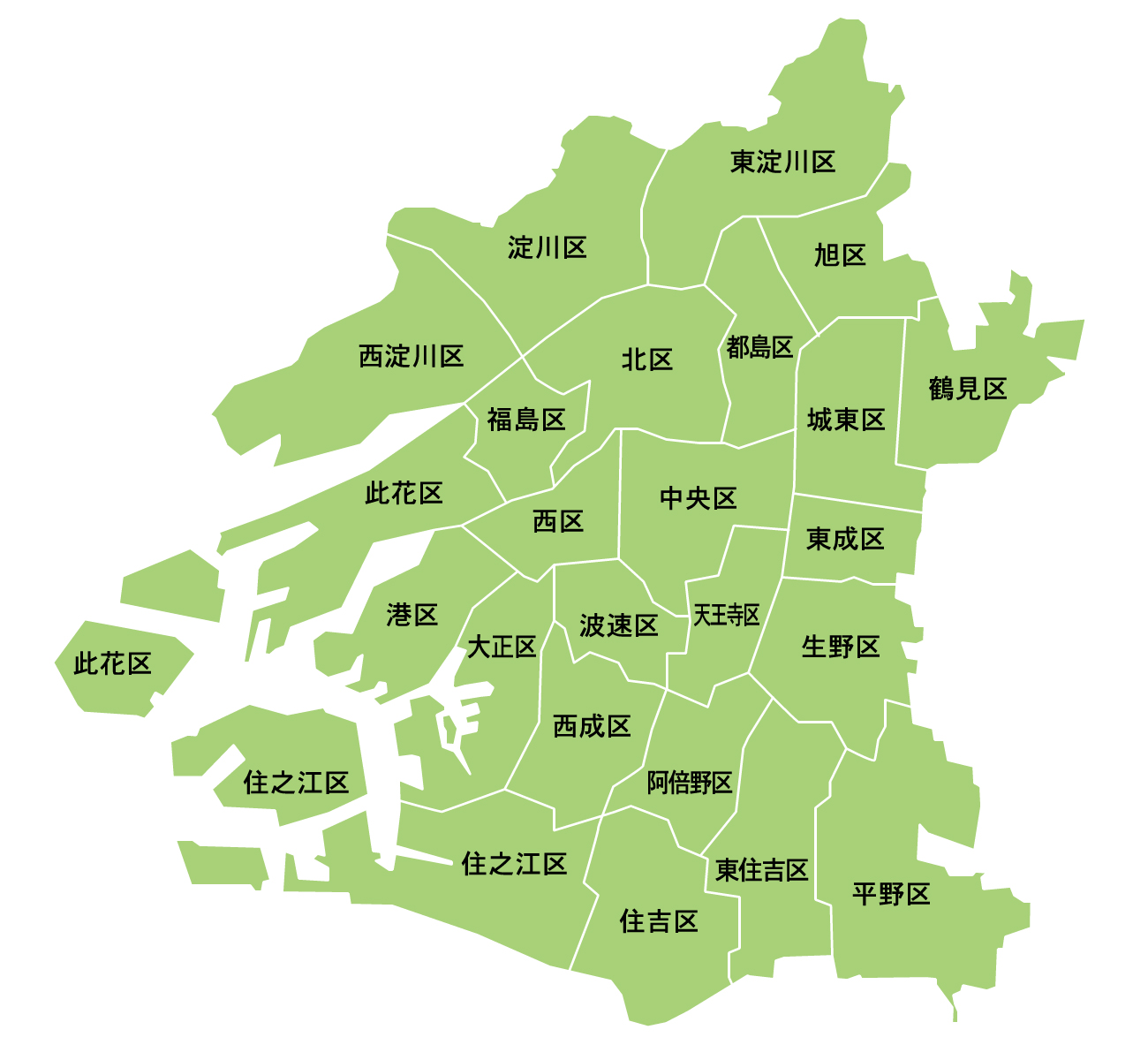
Osaka City consists of 24 administrative districts, and the city seat is Nakanoshima, Kita-ku. It has many rivers and moats in the city area, and is nicknamed the “water city” because of the development of port functions and river transportation historically.
In the “Most Liveable City” ranking (2023 edition) by the Economist Intelligence Unit, a research institute in the United Kingdom, Osaka City is ranked 10th in the world and 1st in Asia, after Geneva and Toronto. Reasons for the evaluation include rational urban design, public safety, prices, advanced education, medical care, and transportation, and the low threat of terrorism.
Looking at the changes from 2015 to 2020 by administrative division, all six wards of central Osaka increased (the three wards of Nishi, Kita, and Chuoh increased by 10% or more, and the three wards of Fukushima, Tennoji, and Naniwa increased by 5% or more), indicating a remarkable return to the city center. The nine wards of the surrounding wards increased (Higashinari, Yodogawa, Abeno, Miyakojima, Joto, Higashi-Sumiyoshi, Tsurumi, Higashi-Yodogawa, and Nishi-Yodogawa) (Higashinari Ward increased by 5% or more)
大阪市由24個行政區組成,市政府所在地位於北區的中之島。市區內有許多河流和護城河,因歷史上港口功能和河流運輸的發展而被稱為“水都”。
在英國研究機構經濟學人智庫(Economist Intelligence Unit)2023年版的“最宜居城市”排名中,大阪市位列全球第10,亞洲第1,僅次於日內瓦和多倫多。評價的原因包括合理的城市設計、公共安全、物價水平、先進的教育、醫療和交通設施,以及低恐怖主義威脅。
從2015年到2020年的行政區變化來看,大阪市中心的六個區(西區、北區和中央區增長超過10%,福島區、天王寺區和浪速區增長超過5%)均有所增加,顯示出市中心的顯著回歸。周邊的九個區(東成區、淀川區、阿倍野區、宮古島區、城都區、東住吉區、鶴見區、東淀川區和西淀川區)也有所增加(其中東成區增長超過5%)。

大阪将于 2025 年举办世博会,并计划于 2030 年在梦岛地区开设一个综合度假村 (IR)。IR 是指由国际会议中心、展览中心、酒店、餐厅、购物中心、娱乐场所、赌场等组成的一组设施。预计这座城市将继续发展。
Osaka will host the World Expo in 2025.
Along with this, the rail access route that will take you directly to the 2025 Osaka-Kansai Expo site will be created.
Osaka Metro will extend the Chuo Line 3.2 kilometers northwest of Cosmosquare Station, and a new “Yumeshima Station” will be built.
It is also positioned as an access line to Integrated Resort(IR).
IR is scheduled to open in the Yumeshima area in 2030. IR refers to a group of facilities consisting of international conference centers, exhibition centers, hotels, restaurants, shopping malls, entertainment venues, casinos, etc.
The Osaka City government is continuously developing Osaka.
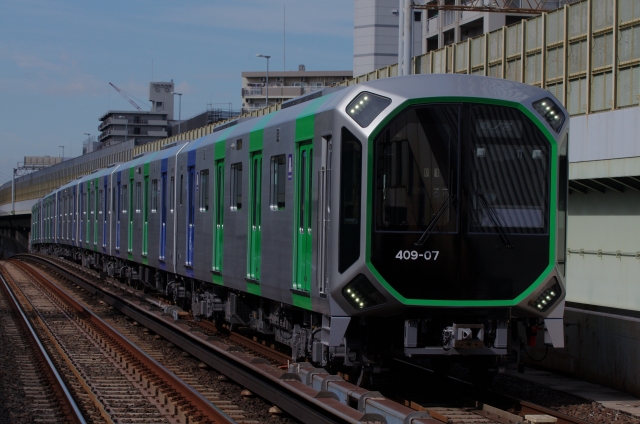
大阪將舉辦2025年世界博覽會,並將建立通往2025大阪-關西世博會場地的直接鐵路通道。大阪地鐵大阪將舉辦2025年世界博覽會,並將建立通往2025大阪-關西世博會場地的直接鐵路通道。大阪地鐵將延伸中央線,自宇宙廣場站向西北延伸3.2公里,並將建設新的「夢洲站」。此外,該線也被定位為通往綜合度假村的接駁線。大阪市政府正在持續發展大阪。
夢洲地區計劃於2030年開設綜合度假村。當中包括國際會議中心、展覽中心、酒店、餐廳、購物中心、娛樂場所和賭場等設施。將延伸中央線,自宇宙廣場站向西北延伸3.2公里,並將建設新的「夢洲站」。此外,該線也被定位為通往綜合度假村的接駁線。